


By Dr. Shashank Chaudhary
Principal Consultant – Surgical Oncology, Max Super Speciality Hospital, Lucknow
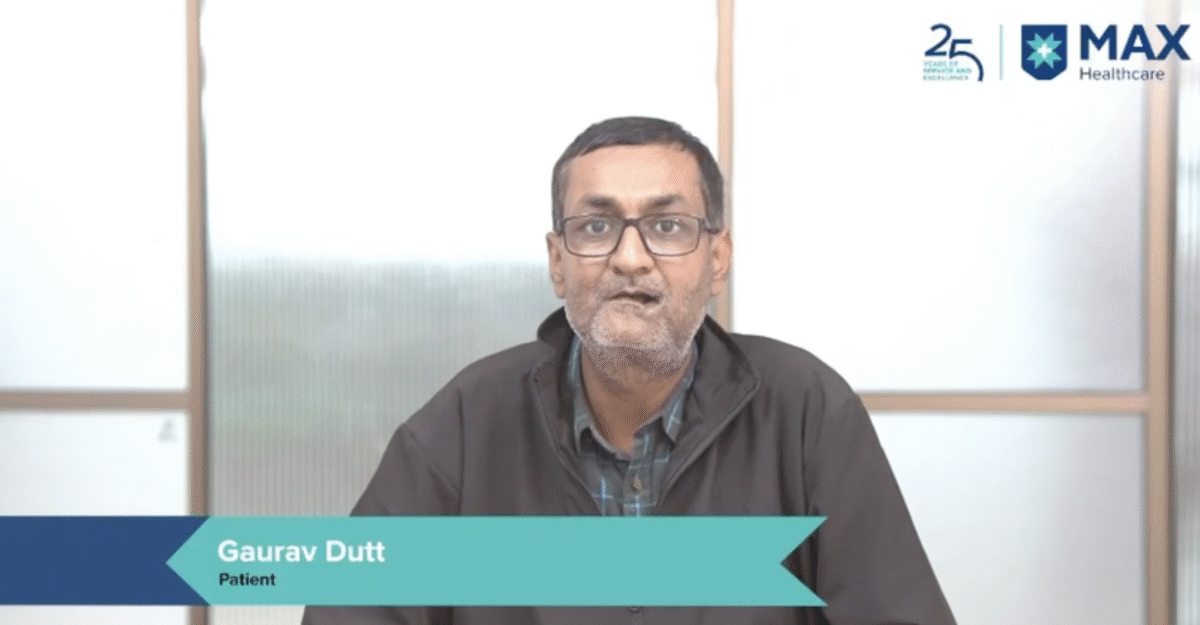
A cancer diagnosis often brings with it a wave of fear and uncertainty. However, with advancements in medical technology and surgical precision, the narrative around oral cancer is changing. Today, I want to share the inspiring story of Mr. Gaurav Dutt, a resident of Krishna Nagar, Lucknow, whose resilience and trust in our team led to a remarkable recovery.
The Diagnosis: Catching it Early
Mr. Dutt discovered he was suffering from oral cancer in September. Like many patients, his initial reaction was fear. After researching his options, he reached out to us at Max Hospital, Lucknow.
Our primary goal is always accurate staging. We began with a biopsy to confirm the malignancy, followed by a CT Scan.
Note on Staging: A CT scan is crucial to check for metastasis (spread of disease). In Mr. Dutt’s case, the scan revealed that the disease was localized but was aggressively moving towards the lower jawbone (mandible).
Because the cancer was encroaching on the bone, immediate surgical intervention was required to prevent further spread and structural damage.
The Surgical Approach: Precision and Reconstruction
The treatment of oral cancer involving the jaw requires a delicate balance between removing the cancer entirely and preserving the patient’s appearance and function (eating, speaking).
1. The Single Incision Technique
To minimize scarring and trauma, we operated through a single incision in the neck. Through this access point, we were able to successfully remove the affected inner part of the tissue and the involved bone.
2. Free Fibula Reconstruction
Removing a part of the jawbone poses a challenge: how do we rebuild the face? This is where modern reconstructive surgery shines.
Along with my colleagues from the Plastic Surgery team, Dr. Anurag Pandey and Dr. Ankita Singh, we performed a Free Fibula Reconstruction.
What is Free Fibula Reconstruction?
This is a sophisticated procedure where a section of the fibula bone (the smaller bone in the lower leg) is removed along with its blood vessels. It is then shaped to mimic the jawbone and transplanted to the face.
This technique is the gold standard for jaw reconstruction because:
● The fibula is strong enough to support dental implants later.
● It allows the patient to maintain normal facial contour.
● It restores the ability to chew and speak normally.
The Road to Recovery
One of the biggest myths about oral cancer surgery is that the recovery is agonizingly long and life is never the same. Mr. Dutt’s journey proves otherwise.
Initially anxious, Mr. Dutt found comfort in our nursing and support staff who explained that modern treatments are not as prolonged or debilitating as they used to be. Following the surgery and reconstruction, Mr. Dutt is now leading a normal life.
As he graciously mentioned:
“Whenever I need anything, Dr. Shashank gives me his full time… and guides me on what to do and what not to do.”
Hearing these words reminds us why we do what we do. Recovery is not just about the surgery; it is about the post-operative care and the continuous bond between doctor and patient.
Key Takeaways for Patients
● Early Detection is Key: A localized tumor is much easier to treat than one that has spread.
● Reconstruction is Possible: Loss of jawbone does not mean permanent deformity. The Free Fibula technique offers excellent functional and cosmetic results.
● Life Goes On: With the right surgical team and post-op care, patients return to their normal lives, families, and jobs.
If you or a loved one notices persistent ulcers, lumps, or difficulty in opening the mouth, do not hesitate to seek an expert opinion.
Next Step
Do you have questions about oral cancer symptoms or reconstructive surgery options? You can book a consultation with us at Max Super Speciality Hospital, Lucknow, to discuss your specific case.